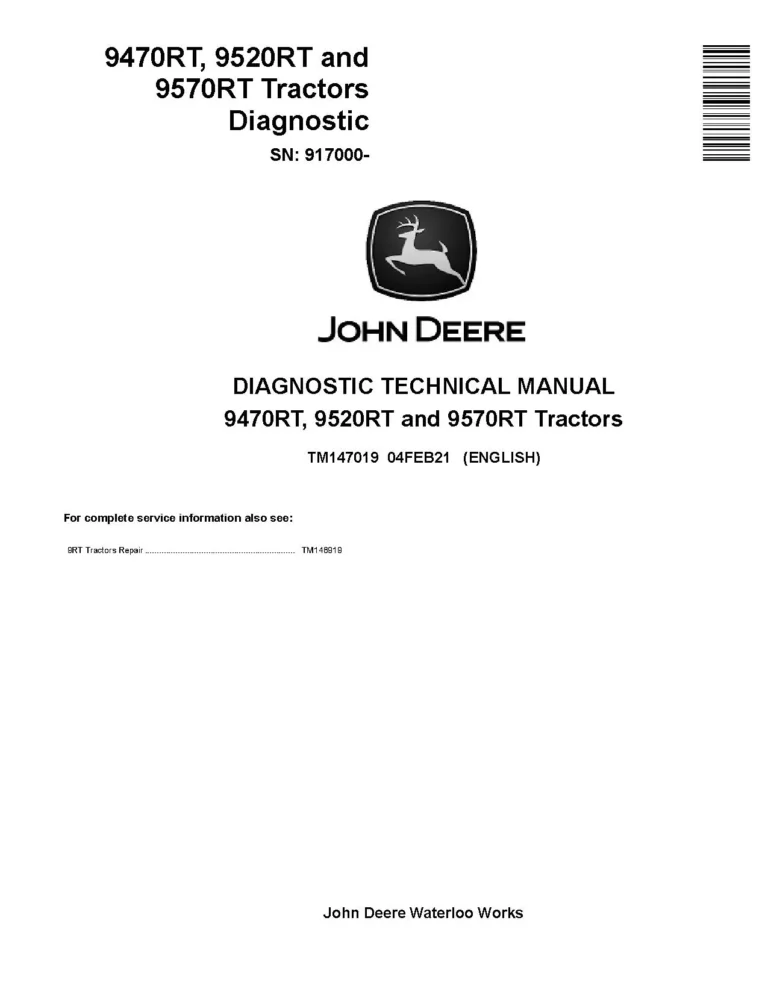
John Deere 9570RT 9470RX
When troubleshooting electrical and transmission problems on John Deere 9570RT and 9470RX tractors, it’s crucial to adopt a methodical approach to identify and rectify underlying issues effectively. Both models are renowned for their robust performance in demanding agricultural tasks; however, like any heavy machinery, they can encounter technical difficulties. This guide outlines a systematic troubleshooting process, tailored for mechanics and tractor owners alike.
Understanding the John Deere 9570RT and 9470RX Tractors
Both the John Deere 9570RT and 9470RX are equipped with advanced technologies designed to enhance performance, efficiency, and reliability. Key features include:
- Powerful Diesel Engines: Both tractors utilize high-performance engines for maximum power output, enabling them to handle a range of agricultural tasks effortlessly.
- Track Systems: The innovative track systems offer superior traction and reduce soil compaction, making these models ideal for various terrains.
- Advanced Hydraulics: Equipped with efficient hydraulic systems that enable smooth operation of implements and attachments.
Common Electrical Issues
Electrical problems can manifest in multiple ways, from starting failures to erratic instrument panel readings. Here’s how to approach these issues systematically:
- Check the Battery and Cables: Ensure the battery is charged and terminals are clean. Corrosion can impede power delivery.
- Inspect Fuses and Relays: Locate the fuse box and inspect all relevant fuses. A blown fuse can disrupt operation, while faulty relays might cause intermittent issues.
- Test Wiring Harness: Inspect the wiring for wear, breaks, or shorts. A damaged wiring harness can lead to various operational failures and sensors not communicating effectively.
- Utilize Diagnostic Tools:
- Use a John Deere diagnostic tool to retrieve specific error codes. Analyzing these codes can pinpoint the problem area efficiently.
Transmission issues can severely impact tractor performance. Here’s a step-by-step guide to diagnose common transmission problems:
- Monitor Fluid Levels: Check the transmission fluid level and condition. Low or contaminated fluid can lead to shifting problems or transmission overheating.
- Inspect Filters: Clogged filters can restrict fluid flow, leading to operational failures. Ensure filters are clean and replaced as per maintenance schedules.
- Assess Control Valves:
- Malfunctioning control valves can lead to erratic transmission behavior. Test them for proper functioning and replace if necessary.
Final Steps and Recommendations
For precise troubleshooting and factory-spec maintenance standards, always refer to the comprehensive John Deere 9470RT and 9570RT Track Tractors Repair Manual to ensure operational safety and compliance with manufacturer recommendations. Remember, regular maintenance can prevent many electrical and transmission issues from arising.
Understanding the operational structure of your John Deere tractor makes troubleshooting manageable and efficient. By employing these systematic approaches, you can ensure your machinery remains in optimal working condition, ready to tackle the toughest agricultural challenges.
Troubleshooting electrical and transmission problems on the John Deere 9570RT and 9470RX tractors can involve several steps. Here are ten key maintenance, inspection, and operational tips to help you effectively diagnose and resolve these issues:
1. Check Battery and Electrical Connections
- Inspect the battery terminals for corrosion and ensure they are tightly connected. Loose or corroded connections can lead to electrical failures.
- Examine wiring harnesses for fraying, cracks, or other signs of damage, ensuring all connectors are secure.
2. Inspect Fuses and Relays
- Locate and inspect the fuse box for blown fuses. Replace any that are damaged.
- Check relays related to electrical systems and the transmission; swapping them with known good relays can help diagnose faulty components.
3. Monitor Voltage Levels
- Use a multimeter to measure the voltage output of the battery and the alternator. Voltage should typically be between 13.5 to 14.5 volts while the engine is running.
- Identify any voltage drops in the wiring that may indicate poor connections or damaged wiring.
4. Run Diagnostic Software
- Utilize the tractor’s onboard diagnostic tools. Connect a diagnostic tool to read any error codes or alerts provided by the tractor’s computer system, which can pinpoint specific issues.
5. Check Ground Connections
- Ensure all ground connections are clean and secure. A poor ground can lead to intermittent electrical issues affecting various systems, including the transmission.
6. Inspect the Transmission Fluid
- Check the transmission fluid level and condition. Low or contaminated fluid can lead to shifting problems and other operational issues.
- Replace the fluid and filter if they show signs of wear or contamination.
7. Test the Transmission Sensors
- Run diagnostics on the transmission sensors, including speed and temperature sensors. Malfunctioning sensors can lead to erroneous data being sent to the ECU, affecting performance.
8. Check for Error Codes
- Use diagnostic tools to check the controller for any fault codes related to the electrical system or transmission. Record the codes and refer to the service manual for troubleshooting steps.
9. Inspect Control Valves and Actuators
- If experiencing shifting problems, inspect control valves and actuators for functionality. Look for leaks or signs of wear and ensure that they are operating properly.
10. Consult the Operator’s Manual
- Always refer to the operator’s manual for troubleshooting guides specific to your tractor model. It contains valuable information on maintenance schedules, specifications, and procedures that can assist in diagnosing issues.
Bonus Tips:
- Routine Maintenance: Follow a regular maintenance schedule, including checking oil, filters, and electrical systems to prevent problems before they occur.
- Professional Assistance: If you are unable to resolve the issue through these troubleshooting steps, consider consulting your local John Deere dealer or a qualified mechanic for further assistance.
By systematically addressing these areas, you can improve the reliability of your John Deere 9570RT or 9470RX tractor and effectively troubleshoot electrical and transmission issues.
Related posts:
 How to Diagnose and Troubleshoot John Deere 9470RX Tractor Problems
 What Is Included in John Deere 9470RX 9570RT Tractor Service and Maintenance?
 What Is the John Deere 9570RT Tractor Service Schedule? Maintenance Intervals Explained
 What Is Covered in a John Deere 9470RX Tractor Service Repair Manual?