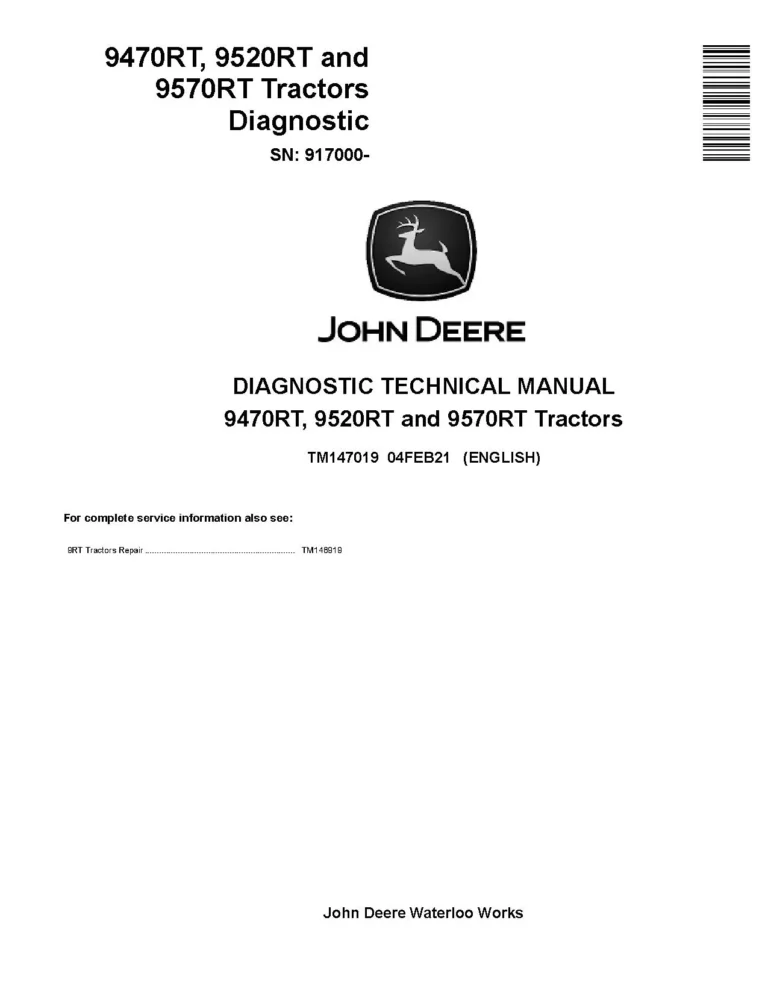
John Deere 9570RT Tractor Service Schedule
The John Deere 9570RT tractor is a robust piece of agricultural machinery, engineered for optimal efficiency in a range of farming tasks. Regular maintenance is crucial for ensuring the tractor operates at peak performance and longevity, much like any other high-end agricultural equipment. Here’s a comprehensive overview of maintenance intervals and practices for the 9570RT that every owner or mechanic should know.
Overview of the John Deere 9570RT Tractor
The John Deere 9570RT is a powerful, versatile track tractor designed for large-scale farming operations. With a rated output of 410 horsepower and advanced technology features, the 9570RT is built to handle demanding tasks, from tillage to planting and harvesting. Here are some of its key specifications:
- Engine Type: 9.0L 6-cylinder turbocharged diesel
- Transmission: IVT (Infinite Variable Transmission) for seamless power delivery
- Track Type: Rubber tracks designed for improved traction and reduced soil compaction
- Max Weight: Approximately 50,000 lbs (unballasted)
The combination of these features makes the 9570RT ideal for both conventional and precision farming practices.
Regular Maintenance Intervals
To maintain the exceptional performance of the John Deere 9570RT, operators must adhere to a strict maintenance schedule. The intervals can vary based on usage and environmental conditions, but the following guidelines serve as a fundamental framework:
Daily Checks
Regular inspections should start each day before usage. Operators should check for any visible issues with:
- Fluids: Ensure oil, coolant, and hydraulic fluid levels are adequate.
- Tracks: Inspect the tracks for wear, tension, and debris accumulation.
- Tires and Rims: While the 9570RT is track-based, ensuring other wheels (if equipped) are free of issues is vital.
Every 50 Hours
After every 50 hours of operation, it’s advised to:
- Change the engine oil and filter.
- Inspect the air filter and replace it if necessary to ensure optimal engine performance.
- Clean the cab and control systems to maintain operational effectiveness.
Every 100 Hours
At 100-hour intervals, additional maintenance steps should include:
- Lubricating grease points throughout the tractor to minimize wear in moving parts.
- Checking hydraulic fluid levels and filters to prevent contamination.
Annual Maintenance
Every year or after approximately 500 hours of operation, a more in-depth maintenance check is required. This includes:
- Comprehensive inspections of the cooling system and fuel system.
- Evaluation and adjustment of track tension and alignment.
- Setup adjustments for precision farming applications, ensuring optimal implement performance.
For precise troubleshooting and factory-spec maintenance standards, always refer to the comprehensive John Deere 9470RT and 9570RT Track Tractors Repair Manual to ensure operational safety.
Common Technical Problems
Like any sophisticated machinery, the John Deere 9570RT may face some technical challenges. Common issues include:
- Hydraulic Failure: Often caused by low fluid levels or contaminated hydraulic fluid. Regular checks are essential.
- Engine Performance Issues: Symptoms include power loss, which may necessitate checks on injectors and filters.
- Track Alignment Problems: Misalignment can lead to uneven tire wear and increased soil compaction. This must be checked and adjusted during regular maintenance.
Conclusion
Investing time in the regular maintenance of your John Deere 9570RT not only ensures reliability but also contributes significantly to the overall lifespan of the machine. Being proactive with maintenance will help avoid costly repairs and downtime, enabling farmers to carry out their operations smoothly and efficiently. Always consult detailed manuals and professional resources to keep your equipment in top-notch condition.
The John Deere 9570RT tractor, like all agricultural machinery, requires regular maintenance and inspections to ensure optimal performance and longevity. Below are ten key maintenance, inspection, and operational tips to help keep your 9570RT running smoothly, followed by an overview of its service schedule and maintenance intervals.
Key Maintenance, Inspection, and Operational Tips
- Regular Oil Changes: Change the engine oil and filter at recommended intervals to ensure proper lubrication and engine longevity.
- Check Fluid Levels: Regularly check and top off hydraulic fluid, coolant, fuel, and DEF (Diesel Exhaust Fluid) to maintain optimum performance and avoid damage.
- Inspect and Clean Air Filters: Check the air filters for dirt accumulation and replace or clean them as needed to ensure proper airflow to the engine.
- Tire Maintenance: Inspect tires for wear and proper inflation; check for any signs of damage. Proper tire maintenance improves fuel efficiency and traction.
- Monitor Belts and Hoses: Inspect belts and hoses for cracks, frays, or leaks; replacing worn components will prevent breakdowns during operations.
- Service the Tracks: For tracked models, regularly inspect and adjust track tension and look for signs of wear or damage.
- Grease Fittings: Lubricate all grease points, including pivot points, drive shafts, and any moving parts to reduce friction and wear.
- Electrical System Inspection: Check battery terminals for corrosion, inspect wiring for damage, and ensure all electrical connections are secure.
- Maintain Implement Connections: Regularly inspect and maintain connections between the tractor and any implements or attachments to ensure safe operation.
- Routine Calibration: Calibrate precision agriculture systems like GPS and guidance systems periodically to ensure they are functioning accurately.
John Deere 9570RT Tractor Service Schedule and Maintenance Intervals
The maintenance schedule for the John Deere 9570RT can vary based on usage, working conditions, and other factors, but the following outlines typical intervals for key services:
- Daily/Before Operation:
- Check engine oil level.
- Inspect tires for pressure and wear.
- Check hydraulic fluid levels.
- Inspect the undercarriage for any debris or damage.
- Every 50 Hours:
- Change engine oil and oil filter.
- Check and clean air filters.
- Inspect battery connections and terminals.
- Every 100 Hours:
- Inspect fuel filter and replace if necessary.
- Inspect and adjust track tension (if applicable).
- Grease all fittings as recommended.
- Every 250 Hours:
- Inspect brakes and conduct a hydraulic system check.
- Test and calibrate equipment and monitors.
- Replace hydraulic filter.
- Every 500 Hours:
- Change engine oil and filters again.
- Inspect and possibly replace coolant.
- Check and clean all cooling fins and radiator.
- Annually:
- A comprehensive service, including in-depth inspections of all fluid levels, filters, belts, hoses, and electrical systems.
- Perform any necessary software updates for onboard systems.
Always refer to the operator’s manual for specific maintenance intervals and procedures. The schedule may vary based on individual operating conditions, so adjustments should be made accordingly. Regular maintenance and care can significantly contribute to the performance and efficiency of the tractor over its lifetime.
Related posts:
 What Is Included in John Deere 9470RX 9570RT Tractor Service and Maintenance?
How to Troubleshoot John Deere 9570RT 9470RX Tractor Electrical and Transmission Problems
 How to Service a John Deere 9470RX Tractor: Complete Maintenance Guide
 What Is Covered in a John Deere 9470RX Tractor Service Repair Manual?