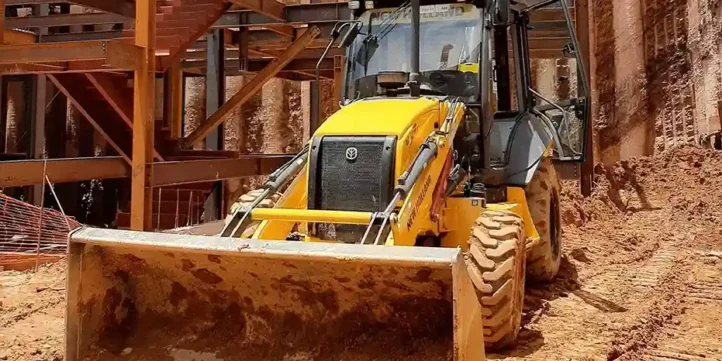
New Holland B95C Series Operator Maintenance Manual
New Holland Tn75Fa Tn85Fa Tn95Fa Tractors Service Manual
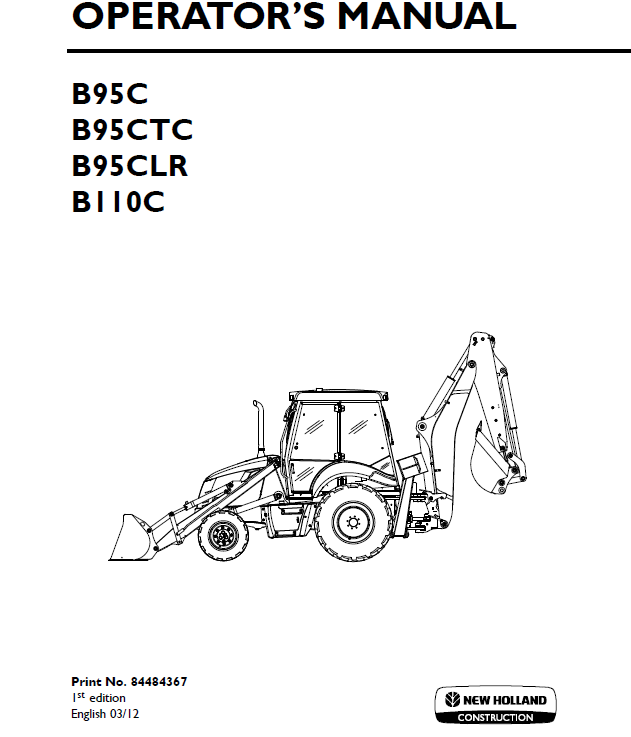
Cover: B95C, B95CTC, B95CLR, B95CLR, Operator Manual
New Holland B95C Series Operator Manual – Detailed Contents Breakdown
The manual is systematically organized into major technical sections, each with detailed subsections.
1. SAFETY
- Safety Alert Symbols and Meanings
- Machine Location and Operation Safety
- Personal Protective Equipment (PPE)
- Pre-Operation Safety Checks
- Mounting, Dismounting, and Seat Belt Use
- Fire Prevention and Battery Safety
2. CONTROLS & INSTRUMENTS
- Operator’s Station Layout
- Instrument Panel Gauges & Warning Lights (Coolant Temp, Fuel, Battery Charge, etc.)
- Control Levers (Loader, Backhoe, Stabilizers, Swing)
- ʜPattern Shuttle Transmission Controls
- ʜPattern Clutch Pedal (if equipped)
3. TECHNICAL SPECIFICATIONS & CAPACITIES
- Engine Model, Power (hp/kW), and Displacement
- Transmission Type and Speed Ranges
- Axle Type and Differential Lock
- Hydraulic System Type, Pump Capacity, and Relief Valve Settings
- Fluid Capacities Chart: Engine Oil, Coolant, Fuel, Transmission/Hydraulic Oil (CASE NEW HOLLAND HYDROTRANSMISSION SYN® or equivalent), Axles, and Grease Points.
4. DAILY OPERATION & INSPECTION
- Pre-Start Walk-Around Inspection (Tires, Leaks, Linkage, Bucket Condition)
- Daily Maintenance Checkpoints (Fluid Levels, Belt Tension, Air Filter Restriction Indicator)
- Starting and Stopping Procedures
- Machine Break-In Recommendations
New Holland B95C Series Operator Maintenance Manual
5. MAJOR SYSTEMS & MAINTENANCE SCHEDULES
- Engine: Air Filter Service, Oil & Filter Change Intervals, Cooling System Maintenance, Fuel System Priming.
- Transmission & Axles: Oil Change/Filter Intervals, Strainer Cleaning, Differential Lock Operation.
- Hydraulics: Oil Change Intervals, Filter Replacement, Implement Bleeding Procedures, Checking for Cavitation.
- Loader & Backhoe: Pivot Point Lubrication Schedule (Zerk Fittings), Checking and Adjusting Bucket Play, Stabilizer Pad Inspection.
- Electrical: Battery Maintenance, Fuse Panel Layout, Light Bulb Specifications.
- Tires: Inflation Pressures (2WD vs. 4WD), Inspection for Cuts/Wear.
6. PERIODIC MAINTENANCE CHARTS
- A tabular chart specifying service tasks at intervals: Every 10, 50, 250, 500, 1000, and 2000 hours. This includes engine oil, all filters (air, oil, fuel, hydraulic), grease fittings, cooling system, brake fluid, and torque checks.
7. TROUBLESHOOTING & DIAGNOSTIC OUTLINES
- Engine Won’t Start: Checks for Fuel Supply, Electrical Power (Battery/Starter), Glow Plugs/Grid Heater.
- Engine Performance Issues: Lack of Power, Excessive Smoke (Black/White/Blue), Overheating.
- Hydraulic System Problems: Slow Operation, Weak or Jerky Movements, Excessive Noise, Oil Overheating.
- Transmission Issues: Poor Shifting, Loss of Power to Wheels, Unusual Noises.
- Electrical Issues: Malfunctioning Gauges, Warning Lights, or Starting Circuit.
8. STORAGE & LONG-TERM PRESERVATION
- Procedures for preparing the machine for extended non-use, including fuel stabilization and battery care.
9. APPENDICES & REFERENCE
- Torque Specifications: Critical fastener values for wheels, loader/backhoe pins, and major component mounts.
- Tire Selection Guide: Options for different terrains.
- Fluid & Lubricant Cross-Reference: Approved OEM and equivalent industry standard fluids.
- Serial Number Locations: For machine and major components (Engine, Transmission, Axles).