Heavy Equipment Transmission Repair Diagnostics Guide
Heavy Equipment Transmission Repair Diagnostics Guide
1. Introduction
Heavy equipment transmissions are essential components of the drivetrain system, responsible for transferring engine power into controlled torque and movement. These systems are widely used in excavators, wheel loaders, bulldozers, graders, skid steers, and articulated dump trucks.
Transmission failure directly impacts machine productivity, making structured diagnostics and repair procedures critical for minimizing downtime and repair costs.
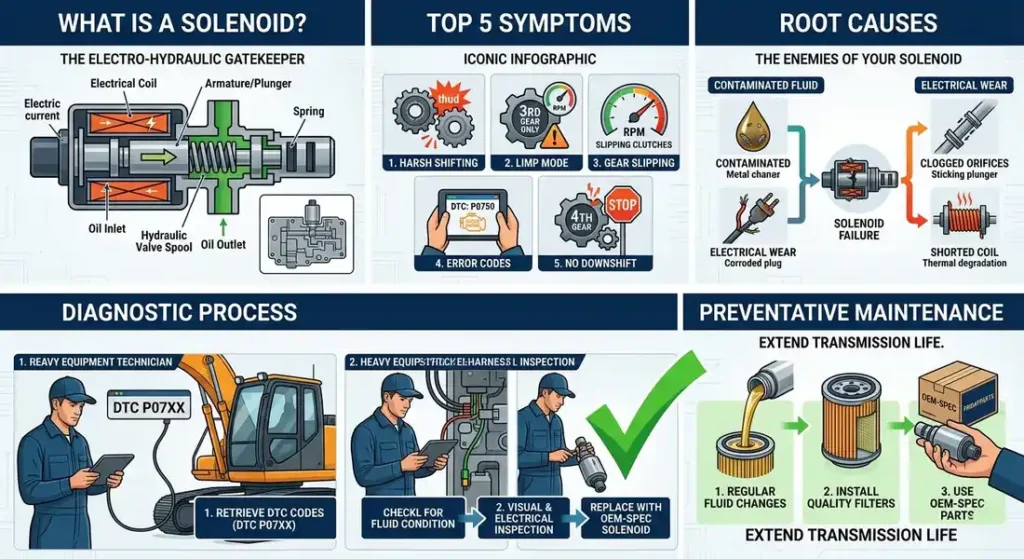
2. Transmission System Overview
2.1 Core Components
Heavy equipment transmissions typically include:
- Torque converter
- Planetary or countershaft gear sets
- Hydraulic clutch packs
- Transmission pump
- Valve body assembly
- Transmission control module (TCM/ECU)
- Cooling and filtration system
2.2 Operating Principle
Transmission systems combine hydraulic pressure, electronic control, and mechanical gear engagement to regulate speed and torque under load conditions.
3. Common Transmission Failure Symptoms
3.1 Gear Slippage
Symptoms:
- Engine RPM increases without speed gain
- Loss of pulling power under load
Likely Causes:
- Worn clutch packs
- Low hydraulic pressure
- Contaminated transmission oil
3.2 Delayed or Harsh Shifting
Symptoms:
- Delay when changing gears
- Harsh or sudden engagement
Likely Causes:
- Faulty solenoids
- Valve body wear
- Incorrect fluid viscosity
3.3 Overheating Transmission
Symptoms:
- High temperature warnings
- Burnt oil smell
Likely Causes:
- Clogged transmission cooler
- Excess internal friction
- Low fluid levels
3.4 No Movement (Forward or Reverse)
Symptoms:
- Engine runs but machine does not move
Likely Causes:
- Torque converter failure
- Severe clutch damage
- Hydraulic pump malfunction
4. Transmission Diagnostic Procedures
4.1 Fluid Condition Analysis
Inspect transmission oil for:
- Color degradation
- Burnt smell
- Metal contamination
4.2 Pressure Testing
Measure line pressure and clutch pack pressure using calibrated diagnostic gauges according to OEM specifications.
4.3 Electronic System Diagnosis
Scan the Transmission Control Module (TCM/ECU) for fault codes and sensor irregularities.
4.4 Mechanical Inspection
Inspect:
- Linkage systems
- Driveline components
- Torque converter performance
5. Advanced Transmission Troubleshooting (Critical Diagnostic Section)
At this stage, hydraulic pressure testing and electronic diagnostics are used to isolate internal transmission faults such as clutch pack wear, valve body malfunction, or pump inefficiency.
5.1 Internal Hydraulic System Evaluation
Check:
- Clutch engagement pressure stability
- Valve body response accuracy
- Hydraulic flow consistency
5.2 Systematic Fault Isolation
Compare:
- Actual pressure readings vs OEM specifications
- Gear engagement timing
- Load response behavior
⚙️ Official Technical Reference (Backlink Placement – OPTIMAL SEO POSITION)
For complete OEM specifications, clutch pack rebuilding procedures, hydraulic schematics, torque values, and diagnostic flowcharts, refer to:
➡️ Heavy Equipment Transmission Repair Manual
This technical documentation is essential for correct disassembly procedures, calibration settings, hydraulic circuit interpretation, and model-specific diagnostic thresholds.
6. Electronic and Hydraulic Transmission Failures
Modern transmission systems integrate both hydraulic and electronic control systems.
6.1 Common Electronic Failures
- Faulty solenoids
- ECU communication errors
- Sensor signal disruption
6.2 Hydraulic Failures
- Pressure loss in clutch circuits
- Pump inefficiency
- Valve body leakage
7. Preventive Maintenance Program
7.1 Daily Inspections
- Transmission oil level check
- Leak inspection
- Noise monitoring
7.2 Scheduled Maintenance
- Fluid and filter replacement
- Pressure calibration testing
- Cooling system cleaning
- ECU software updates (if applicable)
8. Equipment Commonly Affected
Transmission issues frequently occur in:
- Excavators (hydrostatic drive systems)
- Wheel loaders
- Bulldozers (power-shift systems)
- Motor graders
- Backhoe loaders
- Articulated dump trucks
Each machine requires model-specific diagnostic procedures and OEM service data.
9. Conclusion
Heavy equipment transmission diagnostics require a structured workflow combining hydraulic testing, electronic scanning, and mechanical inspection. Proper diagnosis reduces downtime, prevents catastrophic failure, and improves machine lifespan.
For precise repair procedures, always rely on official manufacturer service documentation tailored to each machine model.